There is a growing reaction in the market right now:
“We are going to stop using brokers.”
I understand why some shippers, freight forwarders, and NVOCCs are saying it.
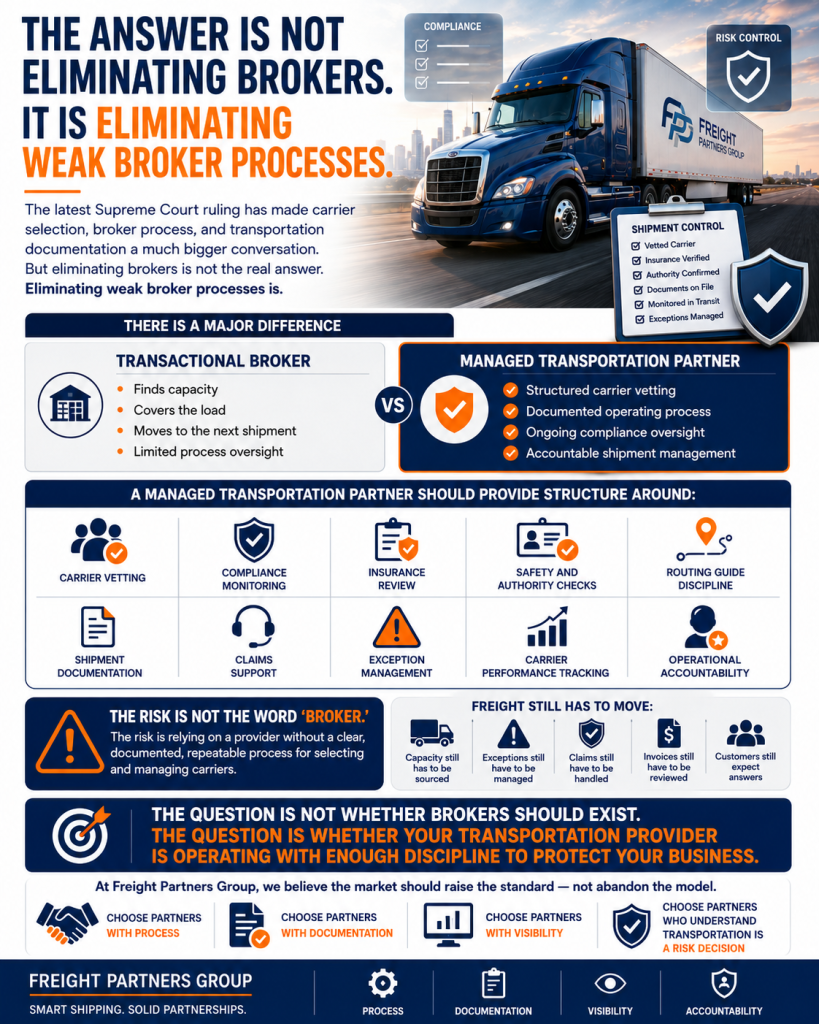
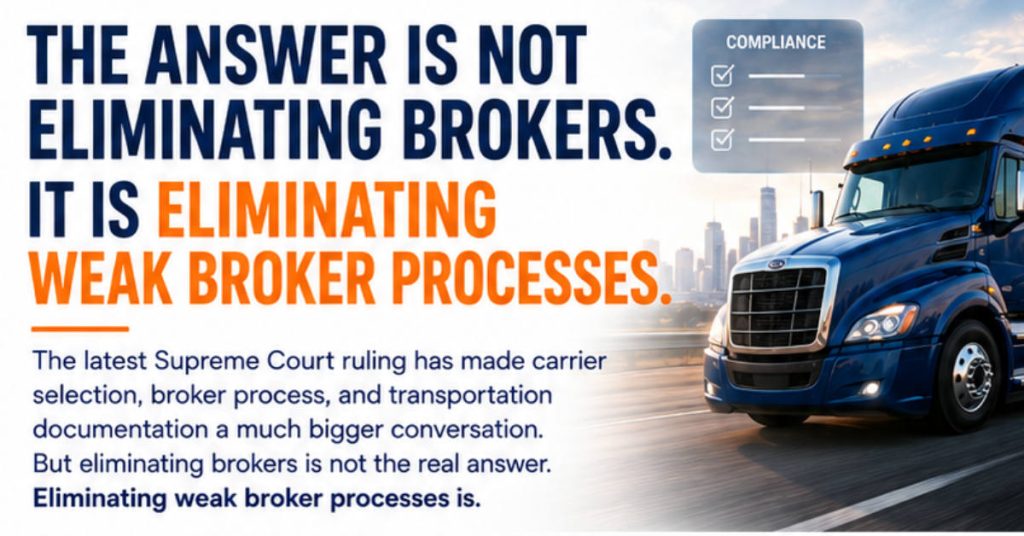
The latest Supreme Court ruling has made carrier selection, broker process, and transportation documentation a much bigger conversation.
But eliminating brokers is not the real answer.
Eliminating weak broker processes is.
There is a major difference between a transactional broker and a managed transportation partner.
A transactional broker may simply find capacity and move to the next load.
A managed transportation partner should provide structure around:
- Carrier vetting
- Compliance monitoring
- Insurance review
- Safety and authority checks
- Routing guide discipline
- Shipment documentation
- Claims support
- Exception management
- Carrier performance tracking
- Operational accountability
The risk is not the word “broker.”
The risk is relying on a provider without a clear, documented, repeatable process for selecting and managing carriers.
Freight still has to move.
Capacity still has to be sourced.
Exceptions still have to be managed.
Claims still have to be handled.
Invoices still have to be reviewed.
Customers still expect answers when something goes wrong.
The question is not whether brokers should exist.
The question is whether your transportation provider is operating with enough discipline to protect your business.
At Freight Partners Group, we believe the market should raise the standard – not abandon the model.
Choose partners with process.
Choose partners with documentation.
Choose partners with visibility. Choose partners who understand that transportation is not just a rate transaction. It is a risk decision.